Triacastela to Sarria
A short, beautiful stage with two possible routes: the peaceful San Xil valley or the slightly longer detour to the imposing Samos Monastery.
Best season: Year-round; the San Xil variant is more comfortable in heavy rain
Map
- Triacastela
- Sarria
FEAACS track published by IGN. Follow current trail signs.
Source: IGN/CNIG · FEAACS · CC BY 4.0 · Accessed:
The Camino Bonsai Café team · Last editorial update:
From Triacastela to Sarria is 17.8 km along the French Way (Camino Francés). It's stage 27, with 350 m of ascent and 570 m of descent, completed in about 4h 15min. Difficulty: Easy.
Two paths, one destination
Right after leaving Triacastela, the Camino splits into two routes of similar difficulty. The San Xil path, slightly shorter, crosses one of the most beautiful valleys on the whole Camino de Santiago, with green meadows and small stone hamlets.
The Samos alternative adds about 7 kilometers, but rewards walkers with a stretch through spectacular oak and chestnut forests along the river, and a visit to the Monasterio de Samos, one of Spain's oldest and most important Benedictine monasteries, with over fifteen hundred years of history.
Whichever route you choose, the path leads to Sarria, the town where most pilgrims who only walk the final 100 kilometers required for the Compostela begin their journey.
What the terrain is like, section by section
Terrain
Gentle, with moderate ups and downs; somewhat more demanding on the Samos variant due to its greater length.
Scenery
Green valleys and oak and chestnut forests, among the prettiest on the whole Camino Francés.
Path type
Dirt track and rural path on both variants.
Villages
A Balsa, San Xil, Montán, Furela, Pintín and Calvor on the short route; Samos on the longer variant.
Water points
Good on both variants, with enough options in the villages along the way.
Shade
Plentiful, especially on the Samos variant, with lush wooded stretches.
Traffic
Light on both routes.
Key fact
The Samos variant adds about 7 km: decide with time to spare if you want to visit the monastery.
Staying in Sarria
Sarria, the usual starting point for the final 100 km, has a wide range of accommodation. Classified by tier; Booking ratings verified in September 2026.
Sarria municipal albergue
Run by the Xunta de Galicia, 40 beds on Avenida de Compostela 16. Pilgrim credential required; may not accept reservations, as public albergues typically operate on a first-come, first-served basis. Tel. 660 396 813.
Albergue Puente Ribeira
Right by the Sarria river, on Rúa do Peregrino 23, with its own bar. Rated 8.4/10 on Booking, with over 1,440 reviews.
Albergue Obradoiro
On C/ Mayor 49, with a self-catering kitchen and a warm welcome. Tel. 982 532 442.
Duerming Villa de Sarria
Right in the centre, next to the fountain, an ideal base for starting the Camino from Sarria.
Hotel Alfonso IX
A 4-star hotel on Rúa do Peregrino 29, with an outdoor pool and a gym.
Aqua Rooms Sarria
A boutique guesthouse with just 3 rooms on Rúa Maior 62, right in the old town. Sarria's best-rated lodging.
Eating well in Sarria
Sarria offers a wide variety of bars and restaurants, with traditional Galician cuisine taking center stage. Details verified in September 2026.
A Pulpería do Luís
One of Galicia's best pulperías; tends to fill up but tables turn over fast. Closed in the evenings.
Mesón Roberto
Known for its octopus, Galician-style caldo and friendly service.
Restaurante Cinza e Lume
Impeccable service and a cosy atmosphere, popular with pilgrims and locals alike.
Stops with history on this stage
One of the Camino's prettiest valleys
A peaceful route through green meadows and stone hamlets, considered one of the finest scenic stretches on the whole route.
The Samos Monastery
One of Spain's oldest Benedictine monasteries, with over fifteen hundred years of history; its cloisters and church are well worth the detour.
Starting point of the final 100 km
The town where most pilgrims seeking the minimum distance for the Compostela begin their journey.
If you have time and energy, the Samos variant is worth it: it's rare to get the chance to visit such a historic monastery right along the Camino.
Getting there and back
If you're starting here: Triacastela has limited bus connections; Sarria is usually the most practical option.
If you need to get back from Sarria: it has a train station and good bus connections, being one of the most popular access points on the Camino.
What to know before this stage
Decide your route before leaving
Check at the Triacastela albergue on the condition of both routes and choose based on your available time and energy.
Consider visiting Samos
If you choose this variant, the monastery offers guided tours: check the schedule if you want to go inside.
Prepare for more pilgrims
From Sarria onward, the number of walkers increases noticeably, as it's the starting point for the final 100 km.
Try the octopus in Sarria
It's a great introduction to the Galician cuisine that will accompany you through the final stages.
Don't ruin this stage
Choosing the Samos variant without enough time
It's about 7 km more: make sure you have the margin before committing to this option.
Not booking accommodation in Sarria
As the starting point for the final 100 km, albergues can fill up quickly in high season.
Underestimating the San Xil valley
Even though it's the "short" variant, its scenery ranks among the best on the whole Camino Francés.
Not stamping the credencial properly
From Sarria onward you need to stamp at least twice a day to get the Compostela: get used to it from now on.
What to pack, travel insurance and getting around
One single guide with the recommended gear, useful services (insurance, eSIM) and transport options for the whole Camino.
Work out how much it will cost you
Set the days, route and type of trip, and we give you an estimate of the total cost with a full breakdown.
Everything you want to know before this stage
How many kilometers from Triacastela to Sarria?
Which variant is better, San Xil or Samos?
Is this stage difficult?
Why is Sarria so important on the Camino?
What is the Samos Monastery?
Browse the stages
Things to do in Santiago de Compostela
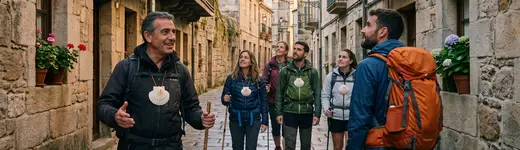
Walking tour of the old town
Small-group walking tour of Santiago’s old town with a local guide.
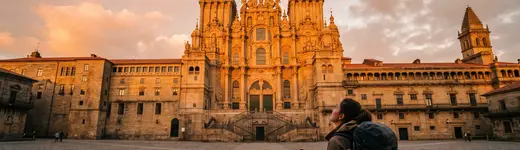
Cathedral and Pórtico da Gloria
Guided visit to the Cathedral with access to the museum and the restored Pórtico da Gloria.
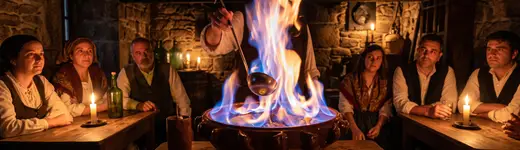
Queimada show and tasting
The traditional Galician flambéed drink, explained in a show designed for pilgrims.
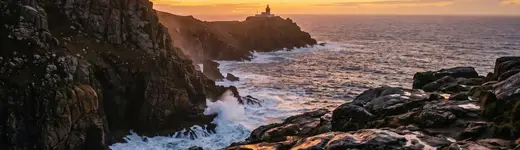
Fisterra, Muxía and the Costa da Morte
The three unmissable stops of the "end of the world" in a full-day trip from Santiago.
Our top recommendation
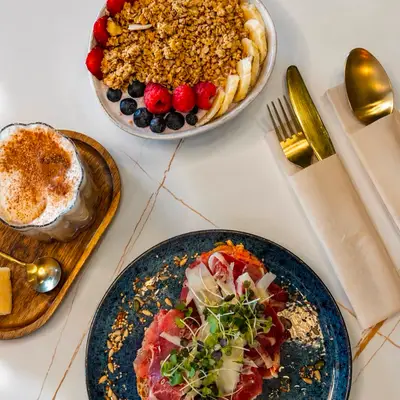
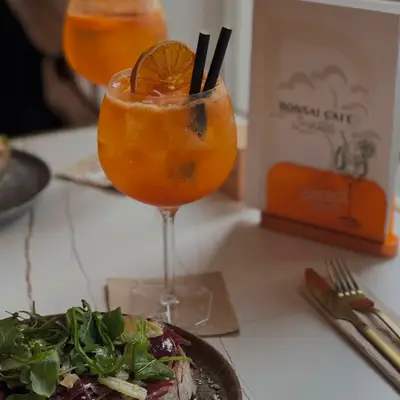
Bonsai Café
You still have stages ahead, but once you reach Santiago you will have earned a good breakfast. Bonsai Café is right in the city centre, with weekend brunch, Berraco by Bou specialty coffee and the best cocktails to toast your arrival.
Map
- Bonsai Café
Transparency: this page contains affiliate links. If you book or buy through one of them, Guía del Camino de Santiago may receive a commission. Read our affiliate policy