O Cádavo Baleira to Lugo
The longest stage in kilometres of the entire Camino Primitivo, but also one of the easiest thanks to its gentle profile.
Best season: Year-round
Map
- O Cádavo Baleira
- Lugo
FEAACS track published by IGN. Follow current trail signs.
Source: IGN/CNIG · FEAACS · CC BY 4.0 · Accessed:
The Camino Bonsai Café team · Last editorial update:
From O Cádavo Baleira to Lugo is 29.5 km along the Camino Primitivo. It's stage 9, with 509 m of ascent and 775 m of descent, completed in about 7 h 15 min. Difficulty: Moderate.
29.5 km is the editorial distance, the one guidebooks use for planning. The IGN GPX track below the map measures 31 km: it can differ because of route variants, the exact start and end points, and the access paths into villages, which it leaves out. Neither figure is the road distance between the two towns.
The longest stage, but with a surprisingly gentle profile
At 29.5 km, this is the longest stage of the whole Camino Primitivo, though its elevation change is comparatively gentle: between O Cádavo Baleira and Castroverde (the only intermediate settlement with services) you cross a modest pass at Alto da Vaqueriza, the day's only real challenge. From there, the Camino runs over practically flat terrain across the Lugo plateau, alternating comfortable dirt tracks with paved stretches, all the way to Lugo.
Arriving in Lugo is one of the great moments of the Camino Primitivo: the city preserves the only complete Roman wall in the world, a UNESCO World Heritage Site, and the Camino enters through the Puerta de San Pedro straight into the old town.
What the terrain looks like, kilometre by kilometre
Terrain
A modest pass at Alto da Vaqueriza at the start of the stage; after that, practically flat terrain across the Lugo plateau.
Scenery
Fields and small rural parishes until reaching the plateau surrounding Lugo.
Trail type
Comfortable dirt tracks and lightly-trafficked paved stretches, especially in the second half.
Villages
Castroverde, the only intermediate settlement with full services on the stage.
Water points
Castroverde is the reference stop; the rest of the stage has scarcer services.
Shade
Variable, with open stretches over the plateau and others with a bit more vegetation.
Traffic
Generally light, though some paved stretches share the road with local traffic.
Key tip
This is a long stage in distance: set off with time, even though elevation isn't the main challenge.
Accommodation in Lugo
Lugo has a wide range of hostels for pilgrims, in and near the wall.
Lugo Pilgrims' Hostel
Spacious, modern Xunta hostel, well-located at the start of Rúa San Pedro, where the Camino crosses the wall.
Albergue Nazaret
Private, religiously-oriented hostel right in the historic centre, just steps from the wall and the cathedral.
Refuelling on this stage
Castroverde is the intermediate reference stop; Lugo has a wide food scene at the end of the day.
Only settlement with full services
Bars and restaurants at the only intermediate point with a complete offer on the whole stage.
Wide food scene
The city has one of the best food scenes on the whole route, especially known for free tapas with a drink order.
Stops with history on this stage
The Roman wall
A UNESCO World Heritage Site and the only complete Roman wall in the world; you can walk along the top, with views over the whole city.
Cathedral of Santa María
A mix of Romanesque, Gothic and Baroque styles at the heart of the old town, with a remarkable north façade.
Roman baths and Miño riverside walk
A great muscle-recovery plan after the stage, by the river, combining a gentle walk with thermal waters.
Provincial Museum
Brings together archaeology, art and ethnography from the province, ideal if you're after an indoor option.
Walking the Roman wall from the top is free and a perfect way to stretch your legs after the longest stage of the Camino.
Getting there and back
If you are starting here: O Cádavo Baleira has a bus connection to Lugo.
If you need to head back from Lugo: the city has a train station and buses with good connections to all of Galicia and the rest of Spain.
Good to know before this stage
Don't be fooled by the distance
It's almost 30 km, but the elevation change is gentle; the main challenge is duration, not technical difficulty.
Stock up in Castroverde
It is the only intermediate settlement with full services on the stage.
Set aside time for the Lugo wall
It's a monument unique in the world; well worth walking along the top upon arrival.
Try Lugo's free tapas
It's a deeply rooted tradition in the city when you order a drink at its bars.
Don't ruin this stage
Underestimating the duration because it looks "easy"
The profile is gentle, but almost 30 km is still many hours of walking; leave with a margin of time.
Passing through Lugo without visiting the wall
It's the only complete Roman wall in the world; skipping it after so many kilometres would be a shame.
Not stopping in Castroverde
It is the only point with full services halfway through the stage; make the most of it.
Rushing the final stretch over the plateau
The flat terrain invites you to speed up, but it's worth keeping a steady pace after so many kilometres.
What to pack, travel insurance and getting around
One single guide with the recommended gear, useful services (insurance, eSIM) and transport options for the whole Camino.
Work out how much it will cost you
Set the days, route and type of trip, and we give you an estimate of the total cost with a full breakdown.
Everything you want to know before this stage
How many kilometres from O Cádavo Baleira to Lugo?
Is this a very hard stage because of its length?
What can you see upon arriving in Lugo?
Where are there services during the stage?
Where does the Camino enter Lugo?
Where can I sleep in Lugo?
Browse the stages
Things to do in Santiago de Compostela
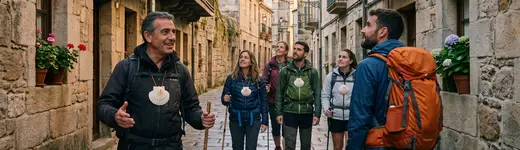
Walking tour of the old town
Small-group walking tour of Santiago’s old town with a local guide.
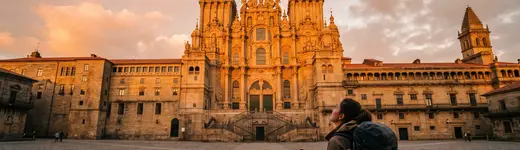
Cathedral and Pórtico da Gloria
Guided visit to the Cathedral with access to the museum and the restored Pórtico da Gloria.
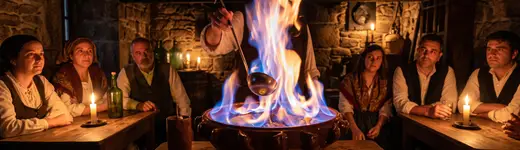
Queimada show and tasting
The traditional Galician flambéed drink, explained in a show designed for pilgrims.
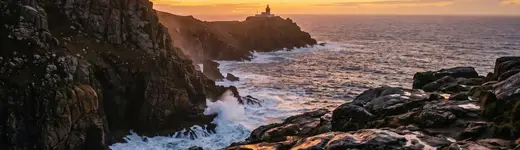
Fisterra, Muxía and the Costa da Morte
The three unmissable stops of the "end of the world" in a full-day trip from Santiago.
Our top recommendation


Bonsai Café
You still have stages ahead, but once you reach Santiago you will have earned a good breakfast. Bonsai Café is right in the city centre, with weekend brunch, Berraco by Bou specialty coffee and the best cocktails to toast your arrival.
Map
- Bonsai Café
Transparency: this page contains affiliate links. If you book or buy through one of them, Guía del Camino de Santiago may receive a commission. Read our affiliate policy