Padrón to Santiago de Compostela
The final stage. From Iria Flavia to the Apostle's embrace, passing through O Milladoiro.
Best season: Year-round
Map
- Padrón
- Santiago de Compostela
FEAACS track published by IGN. Follow current trail signs.
Source: IGN/CNIG · FEAACS · CC BY 4.0 · Accessed:
The Camino Bonsai Café team · Last editorial update:
From Padrón to Santiago de Compostela is 24.3 km along the Portuguese Way. It's stage 11, with 180 m of ascent and 220 m of descent, completed in about 5h30. Difficulty: Moderate.
24.3 km is the editorial distance, the one guidebooks use for planning. The IGN GPX track below the map measures 25.3 km: it can differ because of route variants, the exact start and end points, and the access paths into villages, which it leaves out. Neither figure is the road distance between the two towns.
Why this stage is special
The stage leaves Padrón past the Church of Santiago toward the Iria Flavia Collegiate Church, where Nobel laureate Camilo José Cela is buried. About 3 km later it reaches A Escravitude, with its Baroque church, and continues along Rúa de Francos, home to the oldest stone cruceiro in Galicia. The Way carries on through Osebe, mixing tracks and roads, to O Milladoiro, whose name comes from "humilladoiro" — the place where pilgrims would prostrate themselves upon first sighting the Cathedral's towers.
After the moderate climb to Agro dos Monteiros, the stage's highest point, the Way descends and crosses the Sar river at Ponte Vella to enter the old town of Santiago de Compostela. It's not a physically hard stage, but it is a long one emotionally — every pilgrim dreams of this final stretch to the Praza do Obradoiro.
What the terrain is like, kilometre by kilometre
Terrain
Generally gentle, with the moderate climb to Agro dos Monteiros (262 m) in O Milladoiro as the one notable stretch.
Scenery
Alternates rural and forest areas with built-up stretches, especially in the second half of the stage.
Path surface
A good part runs on asphalt and urban areas, following the N-550, which is crossed up to four times.
Villages
Iria Flavia, A Escravitude, Rúa de Francos, Osebe and O Milladoiro before entering Santiago.
Water stops
Regular services in almost every settlement, especially in O Milladoiro.
Shade
Variable, with more exposed stretches given the fairly urban route.
Traffic
Pay attention at the N-550 crossings, which repeat several times along the stage.
Key tip
Leave early if you want a crowd-free photo at the Obradoiro and a seat at the 12:00 Pilgrim Mass.
Accommodation in Santiago for pilgrims
Book ahead in high season (Jun–Sep): Santiago fills up.
Albergue Azabache
In the heart of the old town, right by Praza da Quintana. Open February to December.
Pensión A Casa do Peregrino
50 m from the Cathedral, between Cervantes and Quintana squares, with original stone walls.
NH Collection Santiago de Compostela
A 13-minute walk from the Cathedral, with an indoor pool, sauna and spa to help you recover.
Refuel on arrival
From the pilgrim menu on the trail to a proper celebratory seafood feast in Santiago.
Stop in O Milladoiro
Bars and eateries with pilgrim menus, almost at Santiago's doorstep.
Octopus & seafood feast
Pulpo á feira, empanada and albariño to toast the finish. Booking recommended on weekends.
Pilgrim breakfast
Arriving mid-morning? A good brunch and specialty coffee is the best reward. See the final section.
Landmarks and historic stops
Iria Flavia Collegiate Church
Former episcopal seat where Nobel laureate Camilo José Cela is buried.
Rúa de Francos cruceiro
The oldest stone cruceiro in all of Galicia, a must-stop on this stage.
O Milladoiro
Its name comes from "humilladoiro" — here pilgrims would prostrate themselves at their first sight of the Cathedral towers.
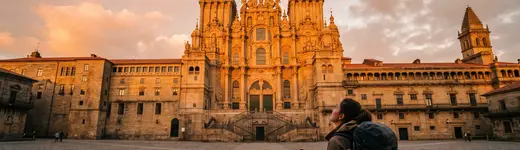
Santiago Cathedral
The Pórtico da Gloria, the Botafumeiro and the Pilgrim Mass. The end of the Way.
More tours and experiences on GetYourGuide.
Getting there and back
Getting to Padrón: if you're starting here, the town has a train station (Vigo-Santiago line) and frequent bus connections.
Heading back from Santiago: well-connected train and bus stations serving all of Spain, plus direct flights from the airport (SCQ), 12 km from the centre.
What we wish we'd known
Really do get up early
Leaving early gets you to Santiago mid-morning, with time for the Compostela and the 12:00 Mass.
Stamp twice a day
For the last 100 km you need two daily stamps on your credential to earn the Compostela.
Sort your bag transfer in advance
If you use a luggage service, pack the night before — the last day feels lighter, body and soul.
Take a moment in O Milladoiro
Even if the towers aren't visible from as far as they once were, this historic spot deserves a pause.
Don't ruin the final stage
Breaking in new shoes on the last day
The worst possible time for a blister. Stick with what you know.
Leaving too late
You'll miss the Pilgrim Mass and find the Pilgrim Office packed.
Not booking accommodation in Santiago
The city fills up in summer. Lock in your bed ahead of time.
Forgetting the second daily stamp
Without the correct stamps for the last 100 km, you won't get the Compostela.
What to pack, travel insurance and getting around
One single guide with the recommended gear, useful services (insurance, eSIM) and transport options for the whole Camino.
Work out how much it will cost you
Set the days, route and type of trip, and we give you an estimate of the total cost with a full breakdown.
Everything you want to know before this stage
How many kilometres from Padrón to Santiago?
How long does the stage take?
Is this a hard stage?
What time should I leave?
What is O Milladoiro?
How do I get the Compostela?
Browse the stages
Make the most of Santiago beyond the Camino
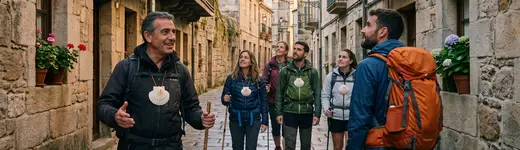
Walking tour of the old town
Small-group walking tour of Santiago’s old town with a local guide.
Cathedral and Pórtico da Gloria
Guided visit to the Cathedral with access to the museum and the restored Pórtico da Gloria.
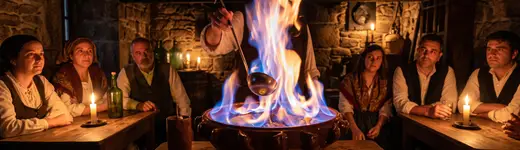
Queimada show and tasting
The traditional Galician flambéed drink, explained in a show designed for pilgrims.
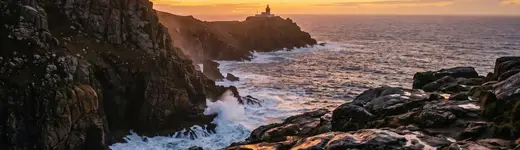
Fisterra, Muxía and the Costa da Morte
The three unmissable stops of the "end of the world" in a full-day trip from Santiago.
What to do after finishing the Way
The Way doesn't have to end at the Cathedral. Here are the best ways to extend the experience.
Finisterre, Muxía and Costa da Morte
The "end of the world", the kilometre-0 lighthouse and the cliffs of the Galician Atlantic, in a single full day.
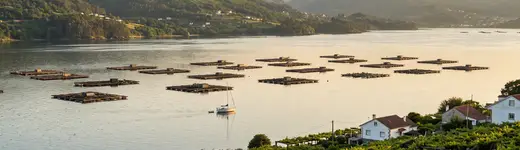
Rías Baixas by boat and winery
Cambados, albariño wine and the best estuary views, with a boat trip included. Perfect for a rest day.
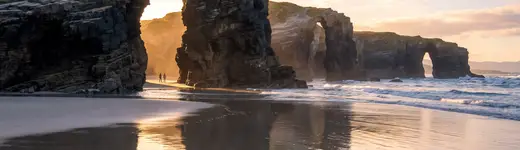
Cathedrals Beach
A full day to Lugo, Ribadeo and the spectacular Praia das Catedrais.
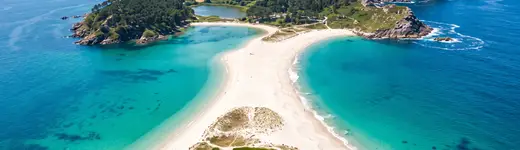
Cíes Islands
The Atlantic archipelago with some of the best beaches in Galicia, on a full-day excursion.

A Coruña and Betanzos
A full day at the Tower of Hercules and the medieval town of Betanzos.

Massages for pilgrims
Ease those legs after the Way at centres in the old town.
Luggage storage
Drop your backpack and move freely around the city on your last day.
Airport transport
From the centre to SCQ hassle-free for your flight home.
Our top recommendation


Bonsai Café
Just arrived in Santiago after the Camino? You have earned a good breakfast. Bonsai Café is right in the city centre, with weekend brunch, Berraco by Bou specialty coffee and the best cocktails to toast your arrival.
Map
- Bonsai Café
Transparency: this page contains affiliate links. If you book or buy through one of them, Guía del Camino de Santiago may receive a commission. Read our affiliate policy