Vilalba to Baamonde
A short, quiet stage through inland Lugo, crossing medieval rivers on the way to one of the largest hostels on the entire Camino del Norte.
Best season: Year-round; paths can get muddy during the rainy season
Map
- Vilalba
- Baamonde
FEAACS track published by IGN. Follow current trail signs.
Source: IGN/CNIG · FEAACS · CC BY 4.0 · Accessed:
The Camino Bonsai Café team · Last editorial update:
From Vilalba to Baamonde is 18.5 km along the Camino del Norte. It's stage 30, with 209 m of ascent and 273 m of descent, completed in about 4 h 30 min. Difficulty: Easy.
18.5 km is the editorial distance, the one guidebooks use for planning. The IGN GPX track below the map measures 19.7 km: it can differ because of route variants, the exact start and end points, and the access paths into villages, which it leaves out. Neither figure is the road distance between the two towns.
A calm haven before Sobrado
After several demanding stages, this day offers a welcome rest: there's barely any significant elevation change along the whole route, which runs across tracks, dirt paths, and the occasional muddy stretch, with very little asphalt.
The route crosses several rivers — the Magdalena, the Trimaz, and the Labrada — under ancient medieval bridges, in a peaceful rural setting barely touched by tourism. It's a perfect stage to slow down and enjoy the inland Galician landscape.
For those who want to better balance the distance with the next stage, toward Sobrado dos Monxes, there's the option to extend the day to Carballedo, A Lagoa, Miraz, or A Pobra de Parga — smaller localities that also have pilgrim hostels.
What the terrain is like, section by section
Terrain
Practically flat throughout, with gentle elevation changes and no technical sections.
Landscape
Farmland, meadows, and small rivers with medieval bridges — typical inland Galician countryside.
Path type
Tracks and dirt paths, with occasional muddy stretches depending on the season; very little asphalt.
Villages
Small rural settlements scattered along the route, with barely any concentration of services.
Water points
Available in the settlements you pass through, though it's worth leaving Vilalba with an adequate supply.
Shade
Variable, with open stretches and others under trees near the rivers.
Traffic
Very low, typical of rural tracks.
Key fact
One of the easiest stages of the entire Camino del Norte: ideal for recovering your legs after the mountainous stretches of Asturias.
Staying in Baamonde
Baamonde has one of the largest hostels on the entire route.
Baamonde Pilgrim Hostel
94 beds — among the largest on the Camino del Norte. Housed in a restored old coaching inn. Disposable sheets, pillowcase and blankets included. Washer and dryer available, with detergent and softener included. Open 1pm to 10pm, no booking, credential and sleeping bag required. If it fills up, you can ask to sleep in the municipal sports hall.
Eating in Baamonde
The food scene is simple but enough for an overnight stop.
Village bars
Simple Galician cooking, with menus adapted for pilgrims.
Historic stops on this stage
Medieval bridges over the Magdalena and Trimaz
Old constructions that testify to the historic passage of pilgrims along this route for centuries.
The old coaching inn
The building that today houses the pilgrim hostel was once a coaching inn, a stopping point on Galicia's communication routes.
Use this calm stage to rest your mind as much as your body: it's one of the few days on the Camino del Norte without any notable physical challenge.
How to get there and back
If you're starting here: Vilalba has a train station, connecting to Lugo, A Coruña, and the rest of the Renfe network in Galicia.
If you need to return from Baamonde: there is a bus stop connecting to Lugo.
What you should know before this stage
Use it to ease the pace
It's one of the gentlest stages of the whole route; a good day to walk without hurry.
Watch out for mud
After rain, some track sections can get muddy; footwear with good grip helps.
Consider extending the stage
If you'd rather balance the mileage better with the next day toward Sobrado, there are intermediate hostels in Carballedo, A Lagoa, Miraz, or A Pobra de Parga.
Don't ruin this stage
Not taking advantage of the relative rest
After the mountainous stages of Asturias, pushing the pace here makes no sense: it's a good day to recover.
Ignoring the medieval bridges
These are small historical details that take almost no time to see and enrich the stage.
What to pack, travel insurance and getting around
One single guide with the recommended gear, useful services (insurance, eSIM) and transport options for the whole Camino.
Work out how much it will cost you
Set the days, route and type of trip, and we give you an estimate of the total cost with a full breakdown.
Everything you want to know before this stage
How many kilometers are there from Vilalba to Baamonde?
Is this stage hard?
How many beds does the Baamonde hostel have?
Can this stage be extended?
What rivers does this stage cross?
Browse the stages
Things to do in Santiago de Compostela
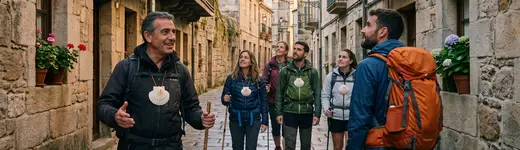
Walking tour of the old town
Small-group walking tour of Santiago’s old town with a local guide.
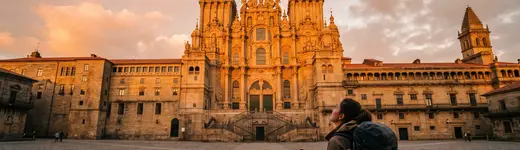
Cathedral and Pórtico da Gloria
Guided visit to the Cathedral with access to the museum and the restored Pórtico da Gloria.
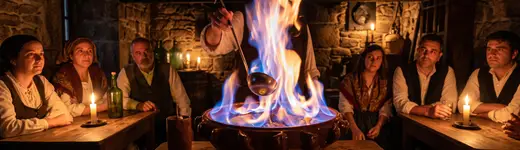
Queimada show and tasting
The traditional Galician flambéed drink, explained in a show designed for pilgrims.
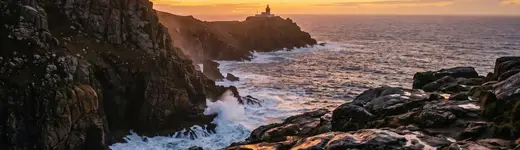
Fisterra, Muxía and the Costa da Morte
The three unmissable stops of the "end of the world" in a full-day trip from Santiago.
Our top recommendation


Bonsai Café
You still have stages ahead, but once you reach Santiago you will have earned a good breakfast. Bonsai Café is right in the city centre, with weekend brunch, Berraco by Bou specialty coffee and the best cocktails to toast your arrival.
Map
- Bonsai Café
Transparency: this page contains affiliate links. If you book or buy through one of them, Guía del Camino de Santiago may receive a commission. Read our affiliate policy